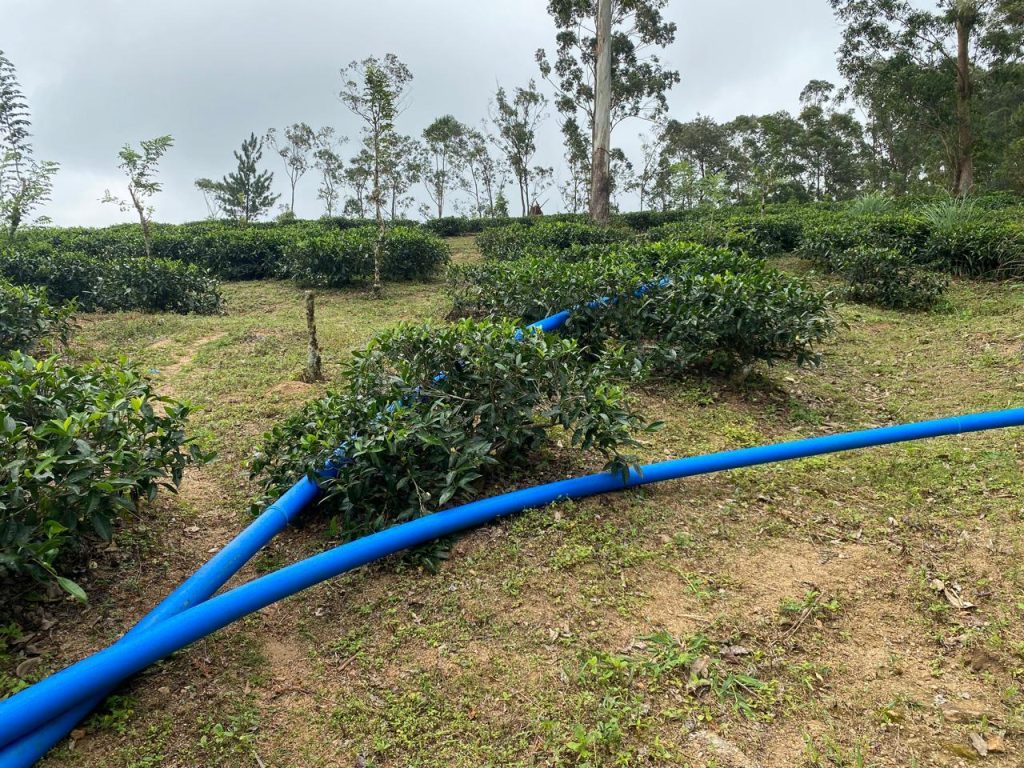
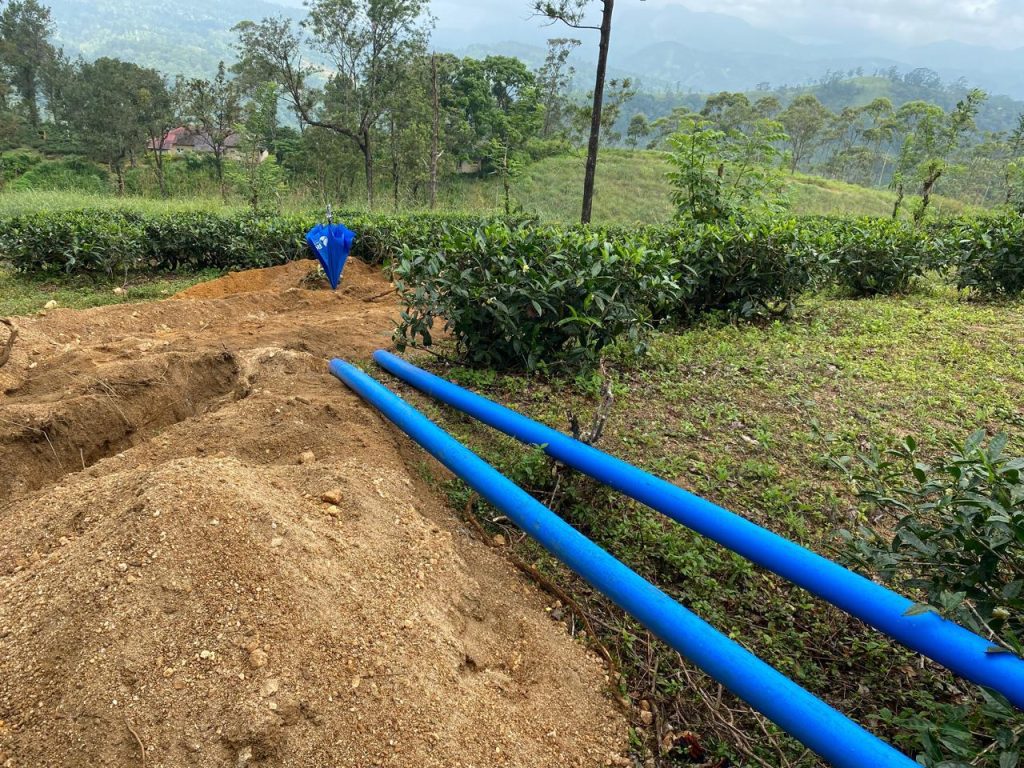
At ROKY Holdings, we provide advanced pipe laying in Sri Lanka for water supply, wastewater, and industrial pipeline networks. With proven experience in National Water Supply & Drainage Board (NWSDB) projects, we deliver infrastructure that lasts. Our team combines technical expertise, modern machinery, and skilled manpower to ensure every pipe laying project in Sri Lanka meets international quality standards and local compliance.
Technical Process of Pipe Laying in Sri Lanka
Surveying and Design We begin with detailed route surveys and geotechnical studies to analyze soil conditions, water tables, and ground stability. Our hydraulic design ensures correct pipe diameter, flow capacity, and pressure zones. By optimizing alignment, we minimize friction losses and simplify future maintenance.
Trenching and Excavation Our team uses both manual and mechanical methods for excavation, depending on the terrain. Trench depth typically ranges from 0.75 m to 2.5 m, determined by pipe diameter, pressure rating, and road load conditions. We apply shoring in unstable soils to protect workers and maintain trench safety.
Bedding and Support Before installation, we prepare a 100–150 mm sand or gravel bedding layer to provide uniform support. In rocky areas, we add cushioning layers to prevent pipe damage. This step ensures stability and extends the lifespan of the network.
Pipe Laying and Jointing We install a wide range of pipe materials such as PVC, HDPE, Ductile Iron (DI), Mild Steel, and GI. Each material requires specific jointing methods: solvent cement for PVC, butt fusion or electrofusion for HDPE, mechanical gaskets for DI, and welding for steel. With laser alignment and trench markers, we maintain proper gradient and direction throughout the process.
Backfilling and Compaction After laying, we backfill the trench in layers. Fine soil covers the pipe up to 300 mm above its crown. Next, we apply mechanical compaction in successive layers to restore trench strength. Roads and pavements are reinstated according to authority guidelines, ensuring safety and usability.
Testing and Commissioning Our engineers conduct hydrostatic pressure testing at 1.5 times the working pressure or a minimum of 10 bar. This step identifies leaks and confirms reliability. Finally, we perform flushing and chlorination before handing over potable water systems.
Standards and Compliance
We strictly follow Sri Lanka Standards (SLS 147, SLS 659, SLS 1210) and NWSDB specifications. For specialized projects, we align with AWWA C600, ISO 4427, and BS EN 805. In addition, our safety procedures meet OSHA and local environmental regulations.
Why Choose ROKY Holdings?
Extensive experience in NWSDB and private sector projects across Sri Lanka.
Certified engineers, welders, and technicians with hands-on expertise.
Specialized machinery such as excavators, dewatering pumps, welding units, and GPS alignment systems.
A commitment to durability, safety, and sustainable infrastructure development.
At ROKY Holdings, we believe strong pipelines support strong communities. Therefore, we combine innovation, precision, and accountability to ensure every project contributes to Sri Lanka’s future growth.